
Child Protection in Ghana


In January 2008, international attention was focused on Accra, Ghana, host of the African Cup of Nations. Investigative reporter Anas Aremeyaw Anas, who had been working undercover at Soldier Bar, a popular night spot in Accra, chose that time to release his photographic evidence of rampant child prostitution to the police and the media. The story was swept up in the news, and the government quickly shut down the bar and took more than 60 child prostitutes into custody. The bar was eventually demolished, but the children, who had been with as many as 20 customers per night and earning about $0.71 USD per customer, were soon dispersed to some of the estimated 200 other establishments in Accra that promoted child prostitution and the international sex trade.
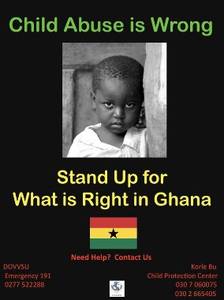
The international attention prompted UNICEF to set up funds to develop a child protection program in Ghana. They contacted Dr. Eben Badoe, a respected pediatrician and child development specialist at Korle Bu Teaching Hospital (KBTH) in Accra, and offered him a grant to build a child protection program. Having trained at the Royal College of Physicians in London, he returned there for a brief visit to educate himself on child protection.
Before this news story highlighted the issue, child abuse was not addressed by pediatricians or physicians in Ghana. There was no training curriculum and no medical standard for a child protection program. Cases of abuse were reported to the Domestic Violence and Victims Support Unit (DOVVSU), a division of the police force dedicated to the protection of women and children that was established in 1998 under the name Women and Juvenile Unit (WAJU). DOVVSU collects reports of abuse and neglect of children and compiles the data. According to the directors in 2009, very few cases ever made it to court – most reports resulted in the abuser paying off the family, and the cases were dropped. When cases were brought to court, physicians were asked to testify, but few had any training in the forensics of child abuse.
In July 2008, a multidisciplinary team from New York University, N.Y., of emergency physicians, toxicologists, public health students, nursing educators, and a pediatric emergency physician went to KBTH under the direction of Dr. Lewis R. Goldfrank to conduct a needs assessment for creating a partnership between the two teaching hospitals. When asked what needs could be filled in pediatrics, the request was made for help in establishing a child protection program.
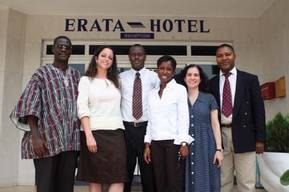
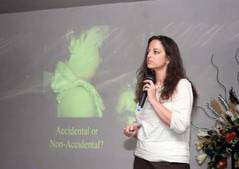
As I entered my pediatric emergency medicine fellowship at NYU, I was asked if I would be interested in this project because of my interest in child protection and my prior experience with international child health in India, Ecuador, Honduras, and the Dominican Republic. I jumped at the idea of the project, and with the help of Dr. Lori Legano, a child protection specialist at NYU, I designed an educational intervention for the physicians at KBTH that used the Starling Survey of Comfort and Knowledge as a pretest, followed by four lectures on physical abuse, sexual abuse, abusive head trauma, and neglect. We traveled to Accra in January 2009 and administered the survey and the lecture series to the physicians at KBTH, followed by a post test. Using a paired T test, we found that both comfort and knowledge increased among the physicians after the educational interventions.
Hearing about the success of the program, UNICEF sponsored a national conference, bringing in many of the 75 pediatricians working in Ghana. The survey was again administered, and the lecture series was expanded to include lectures on medicolegal issues, parenting techniques, and issues specific to Ghana. The conference was well attended and a variety of issues were addressed, including putting child abuse into cultural context.
We also toured the storage facility that would soon be renovated by Zain, a wireless phone company that donated $30,000 to make the area into a beautiful child protection center on the KBTH campus. We were able to contribute ideas about design, layout of the building, and security that were incorporated into the operations. The center opened its doors in December 2009.
I returned to Accra three more times, in August 2009, January 2010, and June 2010, to continue working on the project. I applied for and received an International Community Access to Child Health (I-CATCH) grant in the fall of 2009 for the child protection program with Dr. Badoe.

