Using standardized patients to assess hospitalist communication skills


Standardized patients (SPs) have been used to assess communication skills in undergraduate medical education, but no published studies describe the use of SPs in assessing practicing physicians on their communication skills. In this study, done with 23 hospitalists at a large urban academic hospital, 3 SP scenarios, daily rounding, discharge, and interacting with a difficult patient, were created. After each encounter, each hospitalist reviewed their videotape and received feedback from their SP based on a checklist that had 3 core domains: Listen, Courtesy and Respect, and Explain. These domains correlated with the 3 questions in the Hospital Consumer Assessment of Healthcare Providers and Systems survey that relate to doctors. Hospitalists performed significantly better in the Listen domain, with a mean percent adequate score of 90.2% (95% confidence interval [CI], 72.2%-100%; P < 0.05), and significantly worse in the Explain domain, with a mean percent adequate score of 65.0% (95% CI, 49.2%-83.6%; P < 0.05). Checklist items in the Explain domain that were most commonly not performed adequately were summarizing information at the end of the encounter, teach back, encouraging additional questions, managing team and self-up, setting expectations about length of stay, and timing of tests. After the SP encounters, hospitalists felt more confident in their communication skills. SPs can be used to assess and give feedback to hospitalists and increase confidence in several aspects of communication. Journal of Hospital Medicine 2017;12:562-566. © 2017 Society of Hospital Medicine
© 2017 Society of Hospital Medicine
Hospitalists must create rapport and communicate large amounts of information in a short amount of time without having a prior relationship with the patient.1 High-quality communication can improve satisfaction and compliance, while poor communication leaves patients ill prepared to transition back to the community.2–10
Many medical schools use standardized patients (SPs) to both train and evaluate their students’ communication skills. To our knowledge, no published studies describe using SPs to assess or teach communication skills for hospitalists.
Our objective in this study was to use SPs to assess for deficits in our hospitalists’ communication skills and to determine whether feedback provided by SPs could improve hospitalist confidence in and performance of optimal communication behaviors.
METHODS
Setting and Participants
Scenario and Checklist Development
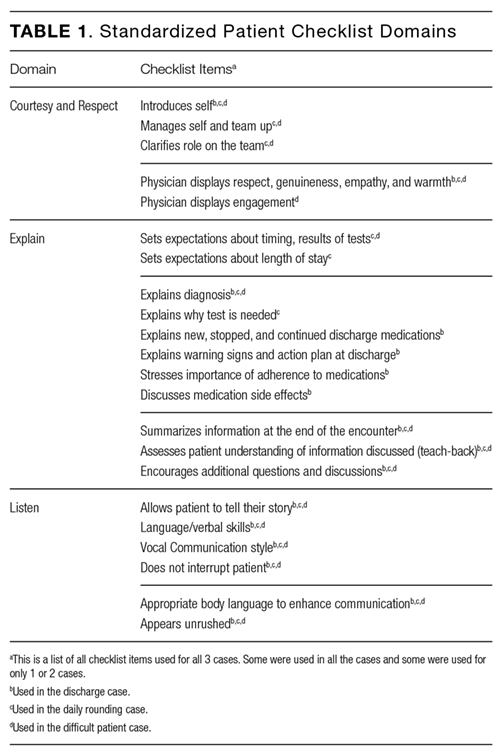
We developed 3 SP encounters around common hospitalist-patient interactions: daily rounding, discharge, and interacting with a difficult patient. In order to assess communication skills, we developed a checklist with 3 core domains: Courtesy and Respect, Listen, and Explain. Each domain corresponded to 1 of 3 questions on the Hospital Consumer Assessment of Healthcare Providers and Systems (HCAHPS) survey that pertained to doctor’s communications skills: (1) How often did doctors treat you with courtesy and respect? (2) How often did doctors listen carefully to you? (3) How often did doctors explain things in a way you could understand? We then developed checklist items that corresponded to essential communication skills within each of the 3 domains. These communication skills were based on best practices and published literature.
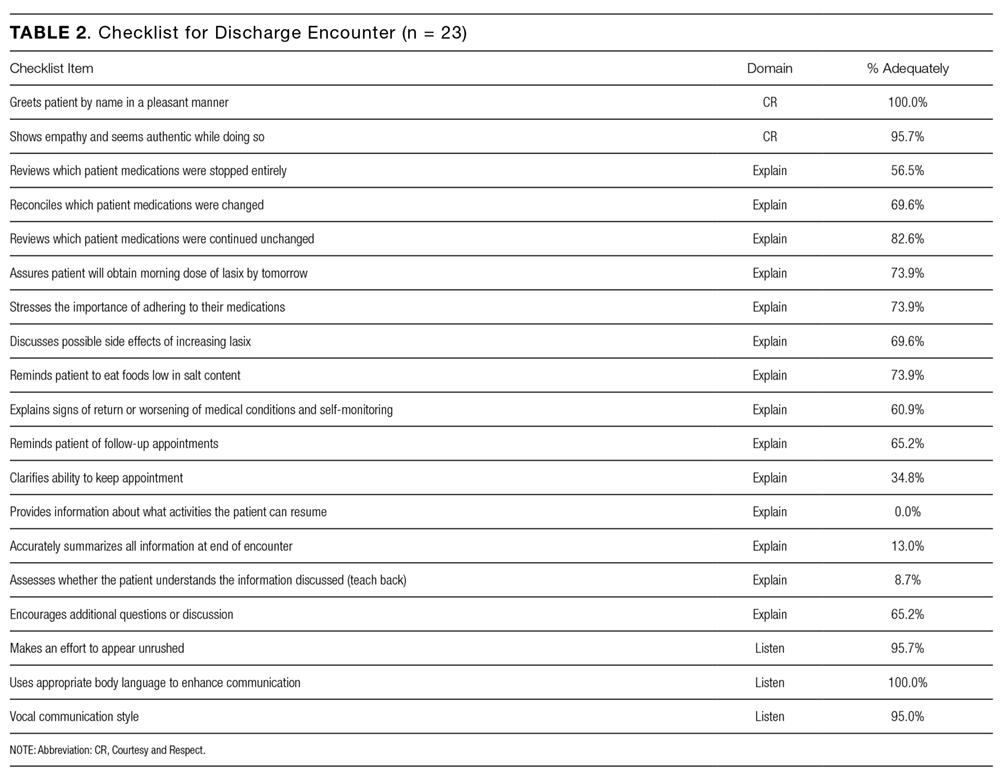
Discharge Encounter (Table 2): Patient admitted the night before with abdominal pain by another hospitalist. The checklist was based on AIDET®, an effective communication skills training protocol that our hospitalist group had been trained on.11
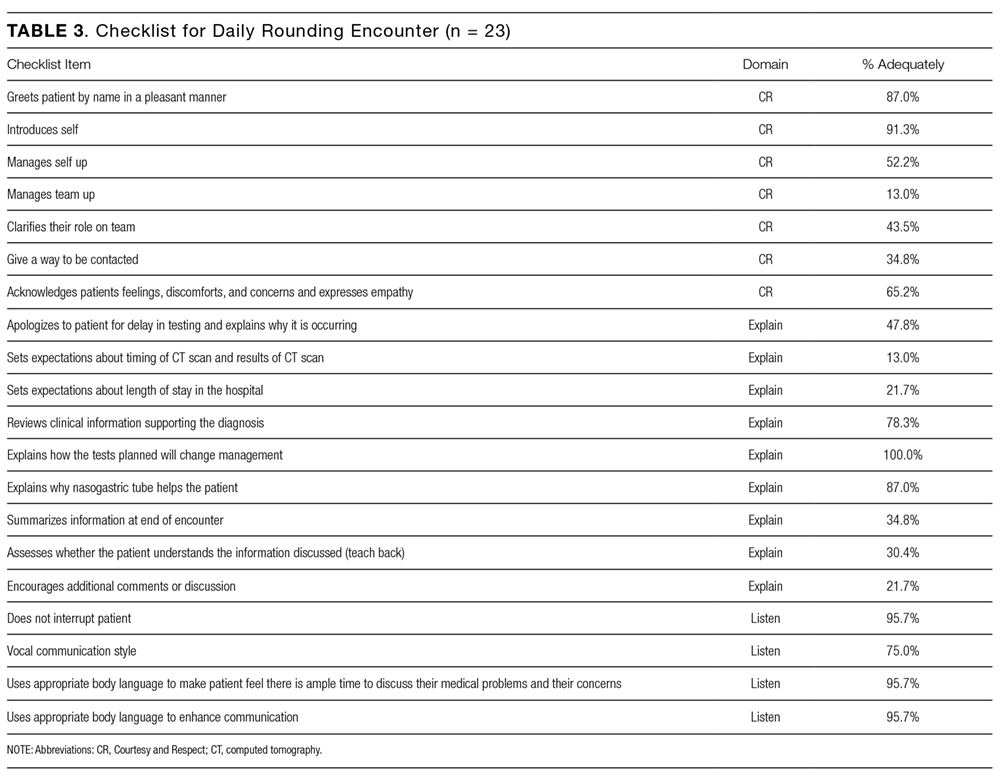
Daily Rounding Encounter (Table 3): Patient being discharged after an admission for congestive heart failure. The checklist was developed from the Society of Hospital Medicine discharge toolkit.12
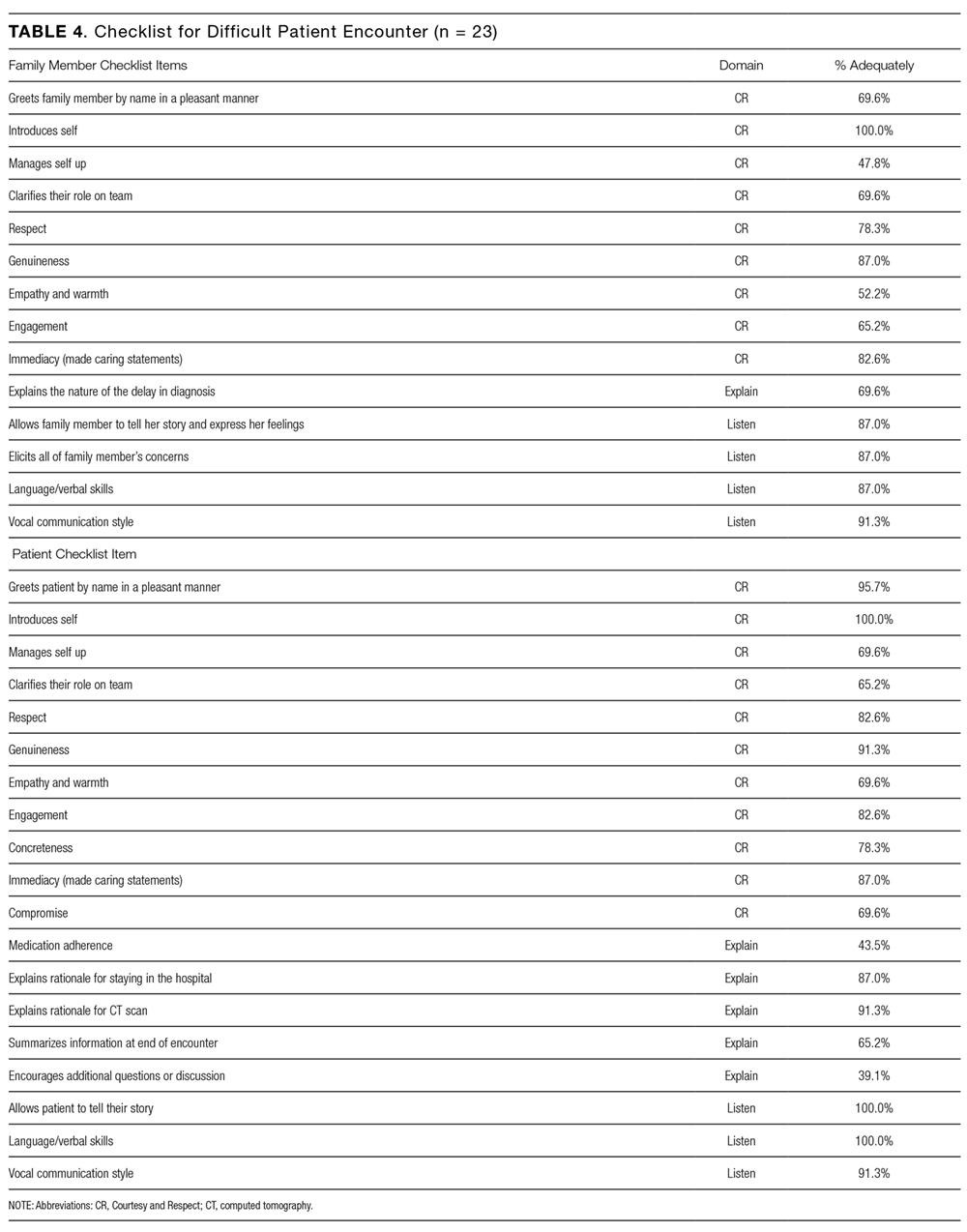
Difficult Patient Encounter (Table 4): A patient and his daughter who were unhappy because of a previously missed lung mass that was now found to be cancer. Our checklist was based on characteristics of therapeutic bedside manner.13
The checklist items were each scored using a 3-point scale of adequate, partial, or inadequate performance. A description of checklist items within each of the 3 domains is listed in Table 1. A postintervention survey was filled out by all hospitalists after the 3 encounters.