
Medical Education Leaps Ahead in Liberia



Dr. James Sirleaf’s career took a detour a few years ago during a visit to see his mother, Liberia’s president, Ellen Johnson Sirleaf – the first women to be elected president in modern Africa – and a 2011 Nobel Peace Prize winner.
Dr. Sirleaf, educated at Morehouse College in Atlanta and Meharry Medical College in Nashville, Tenn., visited Liberia in 2004-2005 during his mother’s run for office. "I didn’t want to do all the campaign things, so I went to visit the hospital, and I saw the lack of medical training; the country was coming out of years of civil war," he said. The war left the country’s health care infrastructure in tatters, with looting of hospital equipment and supplies, and, more important, massive dislocation of medical personnel. There were fewer doctors in the entire country than in some emergency departments in the United States, Dr. Sirleaf noted.
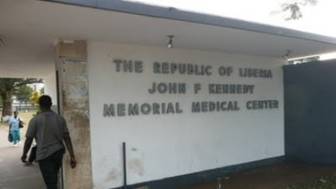
That’s when he decided to work to shore up the medical education and bring more doctors to Liberia. His efforts eventually blossomed into Health Education and Relief Through Teaching (HEARTT) Foundation, a nonprofit organization that sends medical residents and practicing physicians to provide care and teach at the John F. Kennedy Memorial Medical Center, Liberia’s largest teaching hospital, located in Monrovia.
Dr. Sirleaf currently works as emergency medicine physician at Bridgeport (Conn.) Hospital and maintains an academic affiliation with Yale University, New Haven, Conn.
What are some of the key medical issues in Liberia that HEARTT works to address?
Here are some recent statistics: The World Health Organization reported that Liberia has the world’s highest neonatal mortality rate, at 66 deaths/1,000 live births. The prevalence of malaria is approximately 57%, and 14% of these patients die from the disease.
How did the HEARTT Foundation get started, and what makes it unique?
After my visit to Liberia in 2004, I wanted to do more to increase the number of doctors and other medical personnel there. They have hospitals, and what we have provided mostly is manpower. That is one way we stand out. You can give people equipment, but sometimes what is more important is having trained individuals in place to provide care.
I started working with the [department that runs the Global Health and International Emergency Medicine Fellowship]. We now have doctors and residents rotating in Liberia all the time.
When we first got started with HEARTT, there was maybe one pediatrician in the whole country. We have seen how our involvement really adds to the manpower, and that helps the system now and in the future. Many hospitals throughout the country want to be involved, and hopefully, we can keep up and meet their needs to provide medical care for even more people.
How are residents selected?
We organize and come up with a schedule. We recruit residents from several universities in the New England, currently including Brown University, Yale University, and the University of Massachusetts. Residents spend about a month. Practicing physicians are always welcome to come and teach for 2 weeks or more if they are able. In fact, that’s how the program has grown.
The beauty of HEARTT is that it is 100% volunteer. Everyone who is involved works diligently, although nobody gets paid, but it has been a successful program, and the Liberian government appreciates what we are doing.
What are some programs that HEARTT has created and supported?
HEARTT’s programs currently focus on improving the quality of medical care in Monrovia and on training the next generation of local health care practitioners through didactic and bedside teaching. As of 2008, HEARTT had contributed to a 50% increase in the total number of doctors available to provide clinical care and education in Liberia.
In addition, HEARTT volunteers educate patients and caregivers about disease prevention and disease management. Strategies include hosting community health fairs and developing health information for distribution through public media, such as radio and television.
What are some of the challenges and benefits for doctors who participate with HEARTT as residents or physician volunteers?
There are challenges when practicing medicine in any third world setting, such as not having seen real cases of tropical diseases. But the benefit for anyone who practices overseas like this is that you always learn something. You see things you would never encounter otherwise.

