
Shawn Ralston, M.D.: Counseling parents to reduce secondhand smoke


• Editor-in-chief of Hospital Pediatrics
• Founding member, Value in Inpatient Pediatrics Network
• Co-chair, American Academy of Pediatrics Bronchiolitis Clinical Practice Guideline Committee
At the Children’s Hospital at Dartmouth, part of the Dartmouth Hitchcock Medical Center in New Hampshire, the parents of every hospitalized child are asked if they smoke. Unfortunately, like at most children’s hospitals, the conversation often stops there. For Dr. Shawn Ralston, who is the chief of pediatric hospital medicine there, encouraging parents to quit smoking has been something of a crusade throughout her career and she considers it one of the most important actions she can take to improve the health of children.
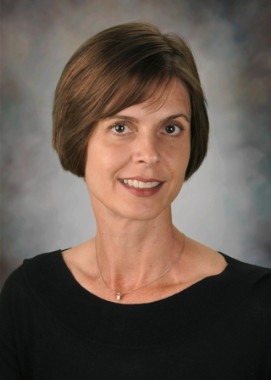
Dr. Ralston has been a pediatric hospitalist for more than a decade, working in New Mexico, Texas, and now New Hampshire. Throughout her career, she’s combined her interest in clinical care, research, and public health, by working to develop clinical practice guidelines on bronchiolitis and by spearheading quality-improvement projects.
But she first became passionate about intervening for smoking parents after reading a 1997 study by Dr. C. Andrew Aligne that calculates the wide-ranging and long-lasting impact that second-hand smoke exposure has on children’s health (Arch. Pediatr. Adolesc. Med. 1997;151:648-53). Since then, Dr. Ralston has conducted two small randomized, controlled trials aimed at honing the messages and interventions that will prompt parents to quit. And on the clinical side, she takes every opportunity to give parents resources to help them quit.
In an interview with Hospitalist News, Dr. Ralston explained how to talk to parents without placing blame.
Question: What’s your technique for starting the conversation with a parent?
Dr. Ralston: I’ve struggled with this question for a long time and it led me to seek training in motivational interviewing. The power of the first impression is often key, so I always try to start the conversation in a neutral, nondirective way. Usually history-taking is a helpful way to allow people to understand that you’re not going to point the finger. So you ask, "How many cigarettes a day do you smoke? Have you ever thought about quitting?" You explore the history without discussing quitting right away.
And instead of giving such directive advice as, "You need to quit," you ask questions. As the questions roll out, the person will often volunteer a history of having quit successfully for some period of time and you can explore what worked well there. Or maybe they wanted to quit but didn’t have access to a primary care provider or to nicotine replacement therapy. The key on the provider side is to have knowledge of where you can find those resources in your community at little or no cost.
Question: If the parent isn’t receptive, do you drop it?
Dr. Ralston: Pretty much. Everything says that directive counseling – finger pointing – doesn’t work. You don’t let them off the hook and you don’t validate the behavior, but you don’t pursue a further conversation at that time. But you can say, "If you change your mind, I’m happy to give you a referral." Try to leave the conversation on a positive note.
Question: These aren’t your patients – what’s the common ground?
Dr. Ralston: The child is the opening. Even if you’re not seeing their child for something that’s related to tobacco exposure, what you can say is that quitting smoking is like immunizing your child against smoking when they grow up. Most of these parents will have been raised by a smoker and have negative feelings about that. One thing I’ve never had anyone answer yes to is "Would you want your child to grow up to smoke?" If you look at the research, having a parent who smokes quadruples the risk of these kids growing up to be smokers.
Question: Who follows up with the patients? Do you follow-up personally or hand them off to their primary care physician?
Dr. Ralston: Smoking is so clearly correlated with living in poverty and other reasons to be uninsured that I’m usually talking to people who don’t have health insurance. So I usually have to rely on something like a quit line. Every state quit line has trained counselors and many of them provide nicotine replacement. Even if you have no way to follow the patient after the screening and the message to quit, referral to a quit line is something anyone can do.
Question: You've studied the impact of parent counseling in two randomized, controlled trials. How successful can pediatric hospitalists be in getting parents to attempt to quit?
Dr. Ralston: The number of parents who actually quit may not appear large at first glance, but when you consider the long-term impact of that number across a population, it really translates to a major impact. The literature shows that you can probably double the chances that a parent quits with a reasonable cessation message. So, if you talk to the parent a couple of times and make a referral to a quit line, you can probably take that parent’s chances of quitting from 5% that year to 10%. The impact that’s likely to have on the child’s overall respiratory health and on whether that child is likely to be a smoker is pretty major.

