
Smoothing hospital-to-home transition for low-income patients


Medical director of Care Transitions Innovation (C-Train) program
Assistant professor in the division of hospital medicine at Oregon Health & Science University, Portland
Leader in regional health reform efforts through Health Share of Oregon
Trend to watch: Ending primary care medical homelessness
Dr. Honora L. Englander, a hospitalist at Oregon Health & Science University, Portland, first became interested in care coordination as a medical student. She was working at the free clinic run by the University of Massachusetts in Worcester when she realized that many of the patients were struggling to manage chronic illnesses and needed access to a primary care medical home, not just urgent care. While she was able to bridge the gaps for some of her patients, there was no systematic approach for meeting this need. Later, when working at OHSU as a hospitalist, Dr. Englander noticed similar gaps in the hospital-to-home transition for uninsured and low-income patients.
Since then she’s been researching ways to improve care for the uninsured and low-income publicly insured patients as they leave the hospital. Dr. Englander, along with colleagues at OHSU, launched the Care Transitions Innovation program, known as C-Train, to improve the quality of care for these patients and to try to drive down their hospital readmissions.
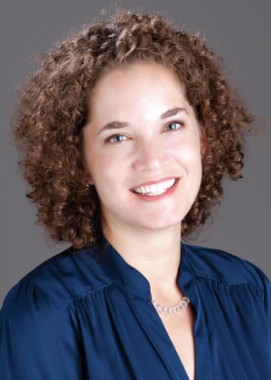
In an interview with Hospitalist News, Dr. Englander described the nationally-recognized program and why it’s so important to reach this particular population of patients.
Question: Can you explain how the C-Train intervention works?
Dr. Englander: There are four main components to our work. The first, and really the linchpin of the program, is the nurse component. Our nurses meet patients on admission and perform a more-detailed needs assessment than is traditionally done. They work with patients during the hospitalization and also for the 30 days after discharge. They help patients identify self-management goals, perform home visits, and do much of the care coordination between hospital, primary care, and social services. In our next iteration, we are linking more closely with community health workers and social services.
We are also working with our partnering clinics to identify patients prior to admission so that if someone is coming into the hospital, they can contact a C-Train nurse on the way in. Down the road, we could potentially even help prevent an admission. But we’re not there yet.
Second, is the pharmacy component. Our pharmacists perform a really detailed medication reconciliation corroborating medication histories and fills with retail pharmacists or clinic pharmacists. They also do detailed patient education. They use a pill card that they developed, which is a low health-literacy, low health-numeracy tool to help patients understand how to take their medicine.
The third piece is the partnerships we have with primary care medical homes. For patients who don’t have a usual source of care, we are able to have timely follow-up care in a primary care clinic. We have a diverse enough array that so that patients can get care close to where they live. The last piece, which I initially didn’t think was going to be a core piece of the work, but is, are the monthly meetings we have at which we bring together diverse providers from across the care continuum. We use our work as a platform for improvement.
Question: How effective has the program been so far?
Dr. Englander: We know that there are patients that we’ve helped. There are really compelling stories for many individual patients. We also conducted a randomized trial in which we enrolled nearly 400 patients. We found that despite doing this multicomponent intensive intervention, we didn’t reduce readmission rates. However, we did improve quality of care and mortality.
There’s mixed evidence in terms of how effective interventions can be to reduce readmissions. Most of the interventions that have been done are somewhat different from ours [Dr. Eric] Coleman’s work is really a coaching model. What we found in this population is that a coaching model alone is really not feasible. These are folks who often have concurring mental illness. Also, the resource demands for this population are so great that a pure coaching model is just not feasible.
Question: What are your plans for expanding the program?
Dr. Englander: We started seeing patients at the end of 2010. The implementation early on was very challenging, but it was also fruitful. The growing pains were worth it. Early on, the diverse needs of this patient population were really overwhelming to a single nurse who was trying to focus on everything from food to housing to medication self-management. So we created a checklist with what we thought were the core elements of our program and asked the nurse to stay within that scope. If there was anything out of that scope, we would see if there was someone else who could do the work. That was a good idea but it wasn’t always feasible.

