
A Brief History of the New SVS


The modern SVS is a vibrant blend of two rich historical and co-evolving traditions – the original SVS and the American Association for Vascular Surgery (AAVS) which merged in 2003 under the leadership of Dr. Jack Cronenwett (SVS) and Dr. Thomas Riles (AAVS). It was a merger that sanctified a long cooperative relationship that had existed between the two organizations.
The original SVS was the brainchild of Dr. James Ross Veal, according to Dr. James S.T. Yao in his history of the SVS beginnings. The society was inaugurated at the Fairmont Hotel in San Francisco on July 3, 1946, at a meeting which chose its name, elected its officers, and 31 charter members. A year later, its first annual meeting was held on June 8, 1947, in Atlantic City, and in a sense this heralded the dawn of modern arterial reconstructive surgery, though it was not until Dr. Robert R. Linton’s ninth presidential address in 1955, that such an address dealt with arterial reconstruction.
Among the charter members was the "father of vascular surgery," Dr. Rudolph Matas of Tulane University. In his acceptance of a ceremonial gavel in his honor, which he passed into the permanent custody of the SVS, he reminisced on how it was on May 5, 1888, "the first actual demonstration of the new principle that repair of an injured or damaged blood vessel could be obtained without the suppression of its blood-carrying function. It took place at the Charity Hospital [wood from one of its stairway posts was used to make the gavel]."
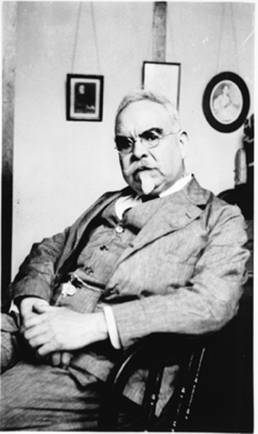
This operation, which Dr. Matas himself performed, relegated to the dustbin of history "the fundamental maxim of that great master of vascular surgery, Antonio Scarpa, in the late 18th century, namely that no wound or injury of an artery could be repaired without a total suppression of its blood-carrying function."
The Matas gavel remains a treasured artifact and was used for many years as the symbol of presidential transition in the SVS.
The first SVS president, Dr. Alton Ochsner, gave his address, entitled "Venous Thromboembolism," at the first annual meeting. From then on the SVS continued incremental growth, expanding and refining its goals and structure and improving the tenor of its annual meeting. The first SVS constitution was drawn up by the committee and then adopted in June 1949, although the documents regarding it are lost to time. The first extant version is from 1955, according to SVS chronicler and charter member Dr. Harris B. Shumacker, Jr.
The official original SVS seal, carrying the image of another vascular surgery pioneer, John Hunter, was designed and implemented on the membership certificate by SVS Secretary Henry Swan in 1955. In 1958, the journal, Surgery, became the official organ of SVS and would remain so for 25 years.
By 1964, SVS began expanding its scope. That year, the SVS requested representation on the Board of Governors of the American College of Surgeons, which occurred in 1965. Also in the 1960s, the SVS pledged its support to the National Society of Medical Research and expanded its ties to the American Heart Association, gaining representation on its Joint Committee on Stroke.
Early lobbying efforts in this period included society support for a bill to establish a National Medical Devices Standard Commission, inspired by the SVS’s keen interest in the safety and composition of surgical implants.
In June, 1973, the first proposal of a Committee for Vascular Surgery on the American Board of Surgery was made, and ultimately implemented several years later. This brought renewed and vigorous interest in the issue of vascular training, which has continued ever since, and by the early 1980s, the American Board of Surgery was offering a Special Certification in General Vascular Surgery in consultation with SVS and AAVS, which provided institutional guidelines for training.
In 1986, SVS created a Foundation for Research and Education, which would, in 1989, under the foundation presidency of Dr. Michael Ellis DeBakey (another SVS charter member), undergo a name change to the Lifeline Foundation, which included sponsorship or responsibility for a variety of research and training oriented awards, grants, and initiatives. This tradition is carried on by the SVS Foundation.
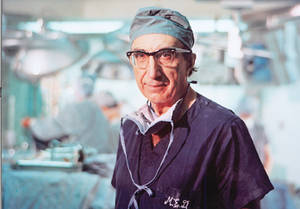
In summarizing the fifth decade of SVS (1987-1996), Dr. Yao cites the introduction of endovascular techniques as a drastic change in the landscape of vascular practice. The sixth decade (1997-2006) "witnessed a milestone of transformation" with the merger of SVS and AAVS. "We were finally united as an independent surgical specialty."

