
Say What?


As a doctor I spend all day using long words, so I figure I have the short ones down. But when prominent politicians get in trouble, I realize I have no clue how to use even the simplest words. First Bill Clinton said, “It depends upon what the meaning of the word ‘is’ is.” You can’t even say that sentence without using the word “is”! I thought that was as bad as it could get, depending upon what the meaning of the word “bad” is. But now, right here in North Carolina, former Senator and Presidential candidate John Edwards is planning to base his defense on charges that he violated federal campaign finance laws on the meaning of the word “the.” If someone comes after “a,” I swear, I’m switching to Mandarin.
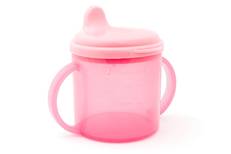
Do you ever feel that as a pediatrician you just keep telling people their favorite kids’ stuff is dangerous? As though I didn’t spend enough time asking parents if they kept their gift receipts for crib bumpers and infant walkers, I now have to come after their bottles, pacifiers, and sippy cups. Soon the only gifts at baby showers will be coupons for massages to help mom cope with the stress of not injuring her baby!
And yet, the data are there: between 1991 and 2010 over 45,000 infants and toddlers were treated in US emergency rooms for injuries associated with bottles, pacifiers, and sippy cups, with the most common mechanism of injury being a fall resulting in laceration of the mouth. But here’s what I want to know: how many kids in that time period fell and injured their mouths without sucking on anything at all? I suspect those data are being suppressed because if they were released the Consumer Product Safety Commission would be forced to issue a recall on teeth.
In the meantime, a new study from Copenhagen leaves me completely confused about how to counsel parents whose 2 to 6-year-old children won’t sleep in their own beds. Apparently, at least in Denmark, kids who got into bed with their parents at night were 1/3 as likely to suffer from obesity as children who never entered their parents’ beds. This article begs several questions, the most obvious of which is, “How did they find obese kids in Denmark?” This is a country with arguably the world’s best national health care program, bicycles in place of cars, and a diet dominated by pickled herring and root vegetables. I’m not sure these data would hold here in the US, where kids who joined their parents in bed would probably first polish off the pizza and donuts on the nightstand. Expect junk food marketers to exploit this study as a new scapegoat: “How do you know the obesity epidemic isn’t caused by kids sleeping alone instead of our new Honey-Glazed Southwest Barbecue Cheesy Puffs?” (I totally made those up, but they sound kind of good, huh?)
On the other hand, thanks to the US Preventive Services Task Force, I now know exactly what to say about skin cancer prevention, and whom to say it to. What the evidence supports, in the face of skyrocketing melanoma rates and the increasing popularity of indoor tanning among young people, is that we should not say the word “cancer.” You say “cancer” to young people, and immediately they think, “schmancer.” No, we should focus our counseling on light-skinned people under the age of 25, and we should carefully explain that excess exposure to ultraviolet light will cause their skin over time to become “ugly.” See, cancer = not scary; ugly = terrifying, resulting in lifelong behavior change leading to lower risk of melanoma. That’s it. I’m starting my Mandarin lessons today.