
VIDEO: Checkpoint inhibitors show few efficacy, safety differences


AT WCLC 2016
VIENNA – The two subclasses of immune checkpoint inhibitor drugs showed very little basis for choosing between them by either efficacy or toxicity in a systematic review of 23 trials run in patients with non–small cell lung cancer during 2013-2016.
For efficacy, inhibitors of the programmed death (PD-1) receptors had a 19% overall response rate when averaged from 12 different trials with 3,284 patients on one of these drugs. The PD-ligand 1 (PD-L1) inhibitors produced a 17% overall response rate in 11 trials with 2,615 patients on one of the drugs, a between-class efficacy difference that was not statistically significant, Rathi N. Pillai, MD, said at the World Conference on Lung Cancer, sponsored by the International Association for the Study of Lung Cancer.
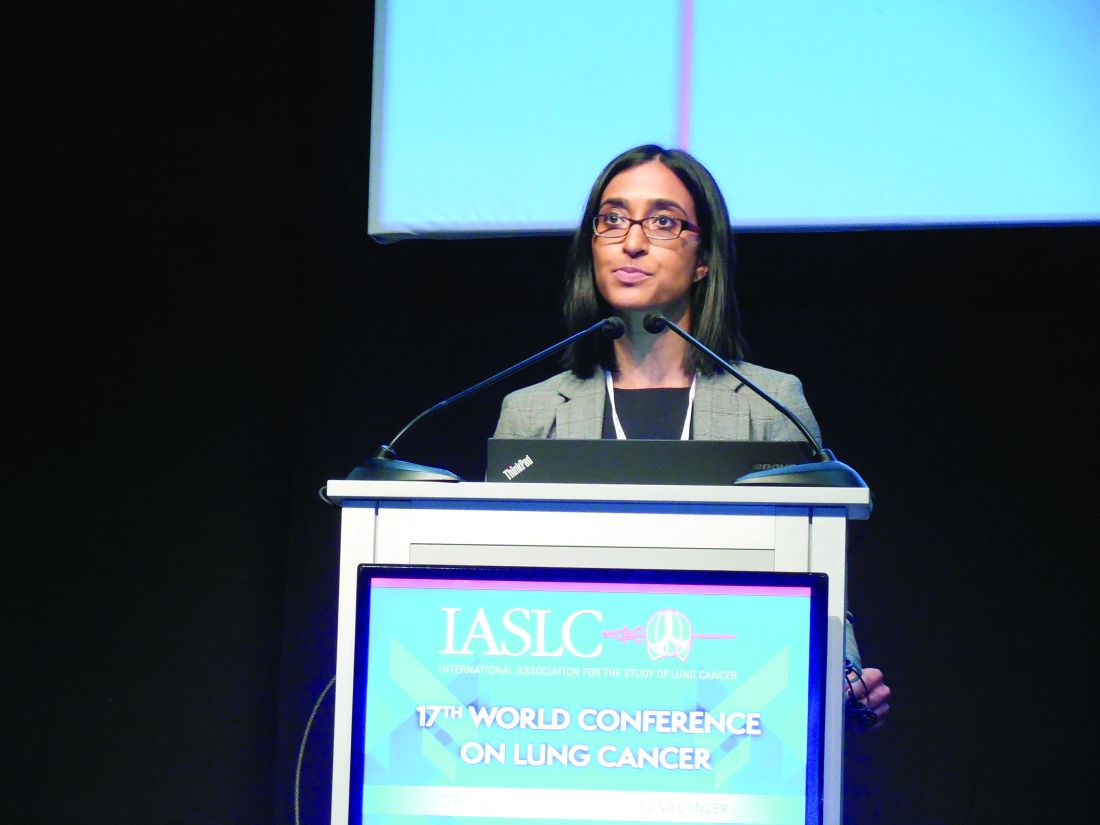
Immune-related adverse events were significantly more common in the patients treated with PD-1 inhibitors: 16%, compared with 11% in the PD-L1 inhibitor-treated patients (P = .04). The two subclasses also showed a trend toward a difference in the most common immune-related adverse event, hypothyroidism, with an incidence of 6.7% with PD-1 inhibitors and 4.2% with PD-L1 inhibitors (P = .07). The two sets of patients showed a statistically significant difference in the next most common immune-related adverse event, pneunomitis, 4.0% with PD-1 inhibitors and 2.0% with PD-L1 inhibitors (P = .02).
The trials with PD-1 inhibitors included nivolumab (Opdivo) and pembrolizumab (Keytruda). The trials with PD-L1 inhibitors included atezolizumab (Tecentriq), durvalumab, and avelumab. The total rate of all adverse events was highest among patients on nivolumab, 76%, and lowest among patients on durvalumab, 61%.
On Twitter @mitchelzoler