
Diagnostic tips for ophthalmic zoster


In reference to the interesting Photo Rounds on ophthalmic zoster by Sarabi et al (“A young girl with blisters on her forehead,” J Fam Pract 2007; 56:551–553), we would like to make some additional comments.
Note the whole nasociliary dermatome. The Hutchinson sign—the appearance of skin lesions along the side of the nose, which represents the dermatome of the nasociliary nerve—is a useful prognostic factor for subsequent ocular inflammation for patients with acute ophthalmic zoster.1 Physicians are often advised to focus their attention only on the tip of the nose—that is, the dermatome of the external branch. However, the nasociliary dermatome is more extensive than that, as it also involves the skin at the inner corner of the eye and the root and side of the nose (FIGURE).2
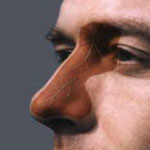
Begin antivirals ASAP. The Hutchinson sign, visual complaints, or a reddened eye without any other explanation are indications for referral to an ophthalmologist.3 Immediate consultation, however, is not usually required, as vision-threatening ophthalmic complications requiring specific treatment do not typically develop during the first week after the onset of a skin rash. The patient should, however, begin antiviral medication as soon as possible, independent of age and ophthalmic condition.
Key in on at-risk patients. Immunocompromised patients may run an increased risk of suffering from zoster. However, since it has not yet been proven that herpes zoster is provoked by any serious underlying pathological condition, a search for possible risk factors is not warranted in otherwise healthy patients in whom herpes zoster develops.
Also keep in mind that the younger a child is when he or she has chickenpox, the greater the likelihood that herpes zoster will develop in childhood or early adulthood.4
Wim Opstelten, MD, PhD
Julius Center for Health Sciences and Primary Care,
University Medical Center Utrecht,
The Netherlands
W.Opstelten@umcutrecht.nl
Michel J. W. Zaal, MD, PhD
Department of Ophthalmology,
VU Medical Center,
Amsterdam, The Netherlands
