
Otolaryngologists Right Where You Need Them


Major Finding: Otolaryngology hospitalists consulted on 375 new inpatients, generating 951 patient encounters, from July 2009 through 2011.
Data Source: Retrospective study of services provided by the otolaryngology hospitalist service at UCSF from 2009 to 2011 using billing records (ICD-9 and CPT codes).
Disclosures: Dr. Russell and Dr. Aldrich reported having no financial disclosures.
FROM THE TRIOLOGICAL SOCIETY COMBINED SECTIONS MEETING
MIAMI BEACH – A novel hospitalist program has optimized inpatient otolaryngology care at the University of California, San Francisco, a retrospective study reveals.
Based on its success, the program is poised to expand further this year and could become a model for other health systems, said Dr. Matthew S. Russell, an otolaryngology hospitalist at UCSF Medical Center and clinical instructor in the department of otolaryngology–head and neck surgery. "Feedback from this service has been overwhelmingly positive. I would encourage others who are interested to undertake a pilot project to see if this model is generalizable to other institutions," he said.
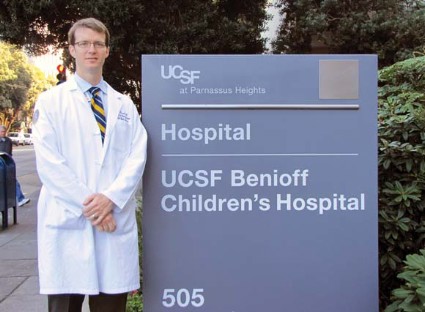
A significant number of requests for otolaryngology care spurred the birth and growth of the program, which may be only one of its kind in the United States. After a pilot feasibility phase, clinicians officially launched the service in July 2009.
Study Data: Volumes of Consults, Interventions Speaks, Well, Volumes
"As an otolaryngologist, I am providing mostly consultative services," Dr. Russell said at the meeting. "The types of problems I see are most commonly acute airway issues and complications of infectious processes in the head and neck. We perform a high volume of bedside procedures, and contrary to a popular assumption, the surgical volume is favorable."
Otolaryngology hospitalists provided a total 384 procedural or surgical interventions during the study period. Endoscopic sinonasal interventions were the most common procedure, followed by transnasal flexible laryngoscopy and operative endoscopy.
The UCSF otolaryngology hospitalists, therefore, work more like specialist consultants and less like traditional primary care hospitalists overseeing a cohort of inpatients, said Dr. Russell.
The study findings could be used to convince hospital administration of the need for this service. Improved time to consultation and surgery for many patients, for example, decreases resource utilization and shortens length of hospital stay, Dr. Russell said. "Prior to our hospitalist model, most of this care was clinically and financially invisible to the institution. We have been able to demonstrate qualitatively the benefit of our unique expertise in solving complex problems as well as mitigating risk from airway catastrophe."
The otolaryngology hospitalists work closely with a number of other clinicians at UCSF. "The program has had a significant clinical impact in both the operating rooms and ICU," Dr. Matt Aldrich, faculty member in the department of anesthesia and perioperative care at UCSF, said in an interview.
"On numerous occasions, Dr. Russell has been very helpful with emergency airway management," Dr. Aldrich said. "He is also an excellent general resource for questions regarding tracheostomy management. This includes being on ‘standby’ for possible emergency tracheostomy during difficult airway management – both intubations and extubations – as well as [providing] assistance in understanding airway anatomic abnormalities during fiber-optic intubation procedures."
"I’ve been very impressed by the speed with which he responds to our requests for help, as well as his clinical skills, knowledge, and professionalism," Dr. Aldrich said. With only a few minutes’ notice, Dr. Russell recently came to the operating room to evaluate a patient with a pharyngeal mucosal cyst prior to placement of a transesophageal echocardiography probe, for example.
UCSF is a 550-bed tertiary care and referral center. Hospitals smaller than approximately 500 beds might not be able to support a 100% full-time equivalent position for this model, he added.
But at UCSF, he is optimistic, predicting a measurably strong impact by year’s end: "This year we are on track to see over 700 unique patients with a significant bedside procedural and surgical volume," Dr. Russell said at the meeting, which was jointly sponsored by the Triological Society and the American College of Surgeons.
Dr. Russell and Dr. Aldrich reported having no financial disclosures.