
Leaders: Hospitalist Takes Macro View


As one of the early hospitalists, Dr. Bradley Flansbaum has seen the good, the bad, and the ugly of hospital medicine.
Dr. Flansbaum, of Lenox Hill Hospital in New York City, said that he's weathered personnel changes, financial setbacks, and takeovers by larger systems during his 15 years as a hospitalist working in New York. "I've seen a lot of change," he said.
But instead of turning him off from the specialty, experiencing the turmoil that can occur in a hospitalist program only served to fuel his fascination with hospital functions, economics, and health policy.
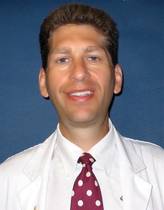
Today, Dr. Flansbaum enjoys taking a macro view of the health care system, focusing on policy issues and population health. "I've become less involved with the nuts and I've become more aware of the big picture," he said.
For instance, last year he helped launch a cooking and nutrition class for residents at Lenox Hill. During the class, residents get six lecture sessions on diet and nutrition followed by hands-on cooking classes at the Institute of Culinary Education. The cooking classes focus on teaching residents to prepare a variety of healthy foods on a small budget. Dr. Flansbaum is one of the instructors, as is his colleague Dr. Robert Graham, associate program director in the department of medicine at Lenox Hill.
The idea is for the residents to take what they learn in the class and use it when counseling their patients in the hospital, but it remains a challenge, Dr. Flansbaum said. Physicians only have a few encounters over a few days to make a lasting impression. Even when residents focus on a single lesson, such as reducing consumption of soda, it's unlikely to be effective if it's not reinforced after leaving the hospital, he said.
And it can't just be physicians who try to deal with society's bad dietary and exercise habits. The policies need to come from the government and work their way down to food manufacturers as well as to health care providers. "The physician community can't be looked upon as the sole answer for eliminating a lot of the potentially reversible causes of morbidity and mortality," he said.
As a founding member of the Society of Hospital Medicine, Dr. Flansbaum has a good view on how far the specialty has come. Last November, the hospitalist society was granted official membership in the American Medical Association, to which Dr. Flansbaum is the SHM's delegate. The upgrade to membership means that the society will have a vote in the AMA's House of Delegates.
There is some important symbolism in being accepted into the AMA. "Sitting at the table is important because it does give us a voice and it does give us some heft to say that we're recognized professionally and that we're a real society and we're a real recognized career," he said.
But whether it will advance the SHM's public policy agenda any faster is anybody's guess, Dr. Flansbaum said. Right now, many hospitalists and other specialists question the AMA's relevance and whether their "home" is really with the AMA. Regardless, the AMA is still seen as the voice of organized medicine by the public, he said, and often by lawmakers too.
For his part, Dr. Flansbaum said that he feels most at home within SHM. He remembers when the society had just 50 members, not 10,000. And it's the interaction with his hospitalist colleagues around the country that keeps him energized, he said.
"It's broadened my horizons getting to know people who practice hospital medicine around the country," Dr. Flansbaum said. "You have a bigger world view."