
FUTURA/OASIS-8 Trial Solves the Fondaparinux Paradox


From the annual congress of the European Society of Cardiology
STOCKHOLM – The use of fondaparinux as an antithrombotic agent in percutaneous coronary intervention for acute coronary syndromes could get a major boost in clinical practice now that the optimal dose of adjunctive unfractionated heparin has been carefully defined in the large randomized FUTURA/OASIS-8 study.
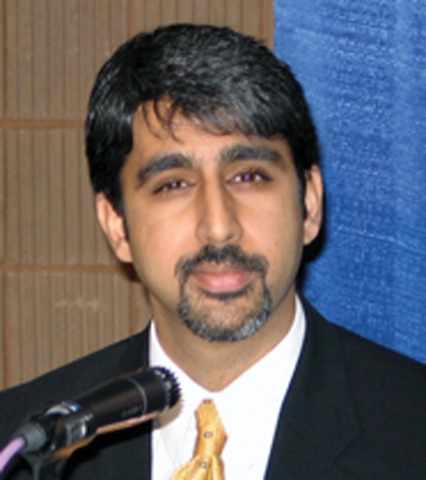
It’s clear from FUTURA/OASIS-8 that standard-dose unfractionated heparin, not low-dose, is the right way to go for PCI in ACS patients treated with fondaparinux, Dr. Sanjit S. Jolly said in presenting the trial results in a high-profile Hotline session at the congress.
Many interventional cardiologists have balked at using fondaparinux, a synthetic factor Xa inhibitor, despite its impressive performance in the earlier Organization to Assess Strategies in Acute Ischemic Syndromes (OASIS-5) trial, in which it halved major bleeding and produced a 17% reduction in mortality compared with enoxaparin (N. Engl. J. Med. 2006;354:1464-76).
The concern among interventionalists has been that catheter thrombosis rates were higher with fondaparinux in OASIS-5. Although adjunctive unfractionated heparin will prevent that problem, the optimal dose of heparin needed in order to avoid catheter thrombosis and ischemic complications without compromising fondaparinux’s impressively low rate of major bleeding has been unclear – that is, until FUTURA/OASIS-8, explained Dr. Jolly of McMaster University, Hamilton, Ont.
The Fondaparinux Trial With Unfractionated Heparin During Revascularization in Acute Coronary Syndromes (FUTURA)/OASIS-8 trial was a double-blind, randomized study involving 2,026 patients undergoing PCI within the next 72 hours for high-risk ACS at 179 hospitals in 18 countries. All patients received 2.5 mg of fondaparinux subcutaneously once daily; after entering the catheterization lab, they were randomized to adjunctive standard- or low-dose unfractionated heparin. Standard-dose heparin was defined as 60 U/kg in the event a glycoprotein IIb/IIIa inhibitor was used and 85 U/kg if not, with dosing guided by activated clotting time (ACT). Low-dose heparin was given at 50 U/kg regardless of glycoprotein IIb/IIIa inhibitor therapy, and without ACT measurement.
The primary study end point, comprising major or minor bleeding or major vascular access-site complications within 48 hours after PCI, occurred in roughly 5% of both study arms. But there was a nominally significant difference between the two treatment groups in the key secondary end point: periprocedural major bleeding and the 30-day rate of death, MI, or target vessel revascularization. This occurred in 3.9% of the standard-dose unfractionated heparin group, compared with 5.8% of those on low-dose heparin (P = .05), representing a 51% increased risk with low-dose therapy.
The risk of major bleeding within 48 hours was 1.1% in the standard-dose unfractionated heparin arm and 1.2% with low-dose heparin in FUTURA/OASIS-8, compared with 3.6% with enoxaparin in OASIS-5, he noted.
Dr. Jolly said many fondaparinux skeptics have commented that they wanted to see reassuring data with larger patient numbers before changing their practice in the cath lab. Now they’ve got it.
“We believe FUTURA/OASIS-8 will definitely improve uptake in the community and amongst interventional cardiologists,” he said.
Hotline co-chair and current American College of Cardiology president Dr. Ralph Brindis agreed.

“This could be a paradigm change,” he predicted in an interview.
“We have been very leery, at least in the United States, in utilizing fondaparinux in ACS patients we’re going to take to the cath lab, despite the incredible benefits shown in OASIS-5. There was the catheter thrombosis issue. Plus, intuitively you’d think that, in transitioning between two different antithrombotic agents or adding one on another, there would be a greatly increased bleeding hazard. But they’ve shown in FUTURA/OASIS-8 that you can do so safely and effectively. I think this is going to be very helpful in the cath lab,” added Dr. Brindis, an interventional cardiologist who is senior advisor for cardiovascular disease at Northern California Kaiser Permanente in Oakland.
Simultaneous with the Stockholm presentation of the FUTURA/OASIS-8 results, the study was published online (JAMA 2010 Aug. 31 [doi:10.1001/jama.2010.1320]).
Dr. Jolly, the principal investigator in FUTURA/OASIS-8, declared having received honoraria and research grants from GlaxoSmithKline, the trial sponsor. Dr. Brindis reported having no financial conflicts.